How Does Fascia Release Work?
What if there's another way?
Most of us have been taught to think about movement in terms of muscles.
Stretch this.
Strengthen that.
Work harder.
Push through.
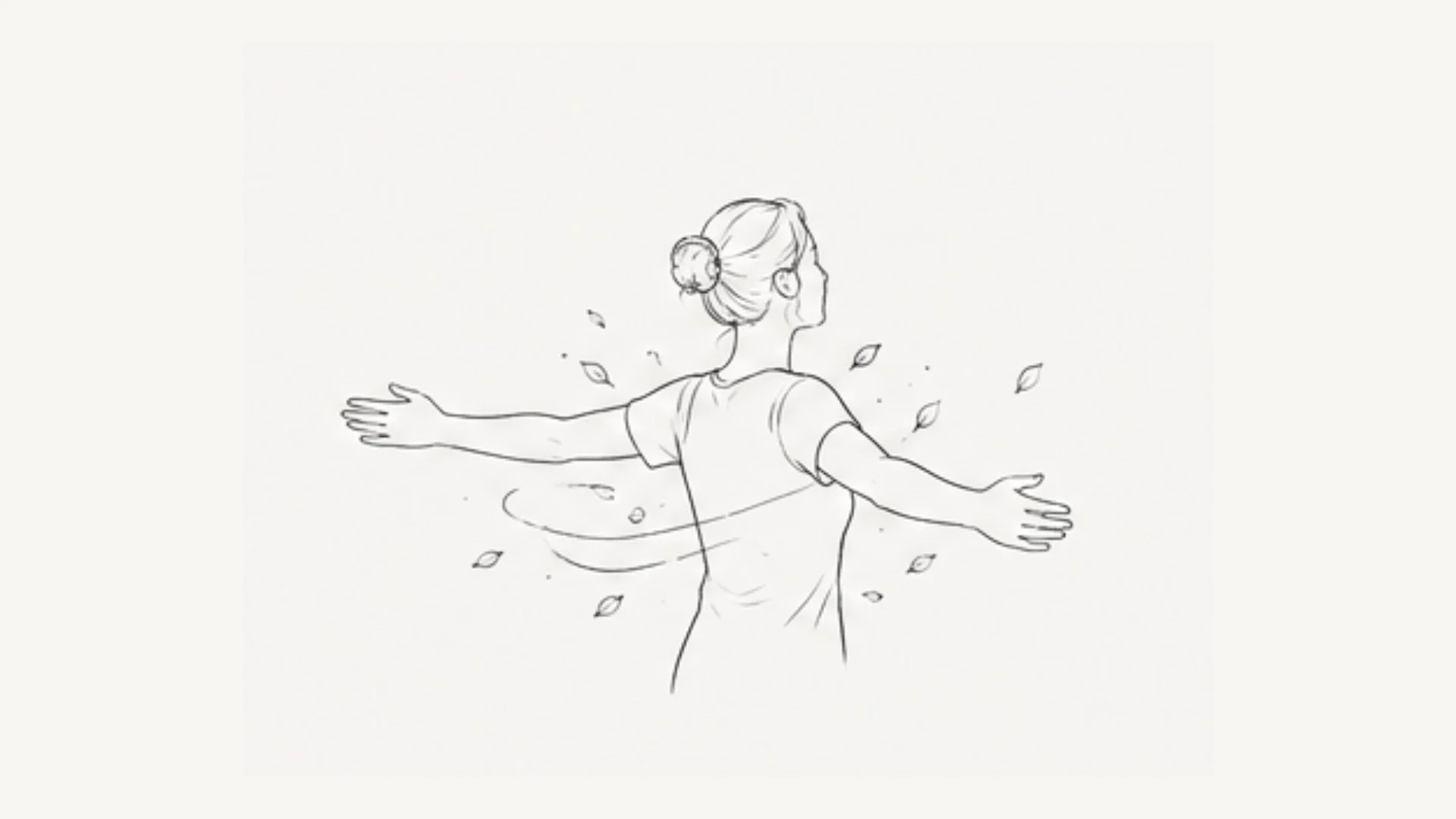
Human Garage® takes a different approach through Fascial Manoeuvres® — movements involving breath, rotation, spiralling and movement through multiple directions.
Rather than simply asking your body to do more, they offer an opportunity to move differently and notice what happens.
What is fascia?
Fascia is connective tissue found throughout the body, surrounding and interacting with muscles, bones, nerves, blood vessels and other structures.
You'll often hear phrases such as “fascia release” used to describe practices intended to affect fascia or the sensations and movement associated with it.
But “release” can make something complex sound very simple.
If a movement suddenly feels easier, a sensation changes or something feels less restricted, we can't necessarily know from that experience alone exactly what changed in the tissues.
Something changed.
That can be interesting without needing to decide immediately what caused it.
So how does fascia release work?
There isn't one single thing called fascia release.
Different practices use movement, pressure, touch, stretching, breath or combinations of these, and the mechanisms behind the changes people experience can be more complicated than the idea of physically “releasing” a piece of fascia.
Human Garage® approaches this through Fascial Manoeuvres®.
Rather than isolating one area, the movements often involve more of the body through spirals, rotations, breath and changes in position.
You move.
You notice.
Something changes.
And you have new information.
Why do Fascial Manoeuvres® look so different?
If you've watched Human Garage®, you've probably noticed that the movements don't always look like traditional stretching.
They twist.
Turn.
Spiral.
Reach.
Bend.
Sometimes they involve breath, shaking or walking.
The body moves through life in more than straight lines, and Fascial Manoeuvres® explore movement through multiple directions too.
Movement is just the beginning.
Noticing instead of forcing
There are ways Fascial Manoeuvres® are taught, but exploring them doesn't have to become another exercise in forcing your body into the correct position.
The practice is in the noticing.
What happens here?
What changes if the position changes?
What becomes easier?
What becomes less available?
What happens if you stop?
You don't have to turn every sensation into an answer.
Sometimes noticing that something changed is enough.
Why do people explore Human Garage®?
Everyone arrives for their own reason.
Some are curious about fascia.
Some have found Fascial Manoeuvres® online.
Some want to explore movement differently.
And some simply saw somebody doing something peculiar on the internet and wondered what the hell they were doing.
You don't need a particular outcome in mind before you begin.
Curiosity is plenty.
Does fascia release work?
That depends partly on what we mean by “work”.
People can experience changes in sensation, comfort or movement while exploring practices described as fascia release. That experience is real, but it doesn't necessarily tell us exactly what changed physiologically or why.
Rather than requiring a particular result, you can explore the movement and notice your own experience.
What happened?
What changed?
And what else might be possible from there?
-
Some days it might be five minutes.
Other days you might spend longer exploring.
Consistency is more valuable than perfection.
-
Human Garage® has a different philosophy and a different intention.
It's less about achieving a position and more about exploring how your body responds when it moves in a different way.
-
No.
Just enough space to move and a willingness to explore.
How can I explore Fascial Manoeuvres®?
You can explore Fascial Manoeuvres® privately with me, or come to a Human Garage® or movement experience when one appears in the diary.
Or keep exploring the ideas: